
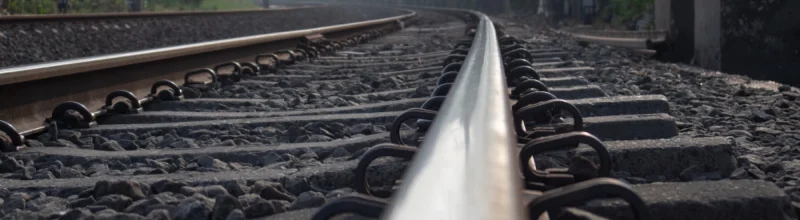
Railroad activity is a constant in Laredo, one of the busiest inland ports in the United States. With its proximity to the U.S.–Mexico border and its role in freight transportation, trains move through the area daily — often through densely populated neighborhoods and heavily trafficked roadways.
According to data from the Federal Railroad Administration (FRA), Texas consistently ranks among the top states for railroad incidents, with hundreds of collisions and derailments reported each year. Webb County, where Laredo is located, regularly sees train-related crashes involving vehicles and pedestrians at crossings.
Nationally, the FRA reports thousands of highway-rail grade crossing incidents annually, many of which result in serious injuries or fatalities. Texas has the most track miles of any state (12,092), which is why Texas alone sees upwards of 200 railroad incidents each year, the highest in the country.
These accidents are rarely minor. When a train weighing thousands of tons collides with a vehicle or a person, the consequences are often devastating. If you or someone you love has been involved in a train accident, understanding your rights is critical. Call Guzman Law Firm at (956) 516-7198 to speak with a railroad accident lawyer in Laredo who can discuss your situation and determine your next steps.
Is a train collision always the fault of the driver?
A common misconception is that train accidents — especially those involving cars at crossings — are always the fault of the driver. While drivers do have a responsibility to obey crossing signals and exercise caution, Texas law recognizes that fault is not always one-sided.
Under Texas’s modified comparative negligence rule, an injured party can still recover damages as long as they are not more than 50% responsible for the accident. This means liability can be shared among multiple parties, including:
- The railroad company
- The train operator
- Maintenance contractors
- Government entities responsible for crossing design or upkeep
For example, if a railroad crossing lacks proper warning signals, has malfunctioning gates, or is obscured by overgrown vegetation, the railroad company or another responsible entity may share liability. Similarly, if a train operator fails to sound a horn or is traveling at an unsafe speed through a populated area, that negligence could contribute to the crash.
In Laredo, where freight traffic is frequent and crossings are numerous, these factors become especially important. Determining fault requires a detailed investigation, often involving accident reconstruction, witness statements, and review of train operation data.
What injuries do you get from being hit by a train?
Train accidents are among the most catastrophic types of personal injury cases. Unlike standard car accidents, the sheer force of a train collision often leads to life-altering injuries or death.
Common injuries include:
- Traumatic brain injuries (TBIs)
- Spinal cord injuries and paralysis
- Crushed limbs or amputations
- Severe burns (in derailments or hazardous material spills)
- Internal organ damage
- Multiple fractures
Because of the severity of these injuries, many railroad accident claims involve catastrophic injury, meaning injuries that permanently impact a person’s ability to work or live independently.
In the most tragic cases, train accidents result in fatalities. Surviving family members may be eligible to pursue a wrongful death claim under Texas law. These claims can help recover compensation for funeral expenses, lost income, and the emotional toll of losing a loved one.
Can you sue if you get hit by a train or injured on a train?
Yes, in many cases, individuals injured in railroad-related accidents may have grounds to file a personal injury claim. However, the circumstances of the accident (and your role in it) will significantly impact your legal options:
| As a passenger |
| If you were injured while riding on a train, you may have a claim against the railroad company if negligence played a role. Common scenarios include: Sudden stops or collisions caused by operator errorPoor maintenance leading to derailmentsUnsafe conditions inside the train (e.g., broken seats, slippery floors) Railroad companies owe a high duty of care to passengers. When that duty is breached, injured passengers may be entitled to compensation. |
| As an employee |
| Railroad employees are typically covered under the Federal Employers Liability Act (FELA), a federal law that allows injured workers to sue their employer for negligence. Unlike standard workers’ compensation systems, FELA requires employees to prove that the railroad was at least partially at fault. This could include: Unsafe working conditionsInadequate trainingFaulty equipment FELA claims can be complex, but they often allow for broader recovery than traditional workers’ compensation claims, including damages for pain and suffering. |
| As a motorist |
| Motorists are among the most common victims of train-related accidents, particularly at railroad crossings. While some accidents occur due to driver error, others involve contributing factors such as: Malfunctioning crossing signals or gatesPoor visibility due to inadequate lighting or obstructionsImproperly marked crossings If any of these conditions played a role in your accident, you may have a valid claim against the railroad company or another responsible party. |
| As a pedestrian |
| Pedestrians are especially vulnerable around railroad tracks. While trespassing laws can complicate these cases, there are still situations where a pedestrian may have a claim, such as: Lack of proper warnings in high-foot-traffic areasFailure of train operators to sound horns or apply brakesKnown “frequent trespasser” areas where railroads are expected to take additional precautions Each case depends heavily on the specific facts, making legal guidance essential. |
Is it worth getting a lawyer after an accident involving a train?
Railroad accident cases are not like typical personal injury claims. They often involve large corporations with extensive legal teams, complex federal and state regulations, and highly technical evidence.
Working with an experienced train accident lawyer Texas residents trust — like Javier Guzman of Guzman Law Firm — can make a significant difference in the outcome of your case.
A railroad accident lawyer in Laredo can:
- Conduct a thorough investigation into the accident
- Identify all potentially liable parties
- Handle negotiations with insurance companies and railroad representatives
- Work with experts in accident reconstruction and medical evaluation
- Build a strong case for maximum compensation
Without legal representation, it’s easy to be overwhelmed — or worse, to accept a settlement that doesn’t fully account for your injuries and long-term needs.
Call Guzman Law Firm for justice after a railroad accident
A railroad accident can change your life in an instant. Whether you were injured as a passenger, motorist, pedestrian, or railroad worker, you may be entitled to compensation, but timing is critical. Evidence can disappear, and legal deadlines can limit your ability to file personal injury claims.
As you search for a railroad accident lawyer in Laredo, choose one who will stand up to powerful railroad companies and fight for the compensation you deserve — just like the team at Guzman Law Firm is prepared to do.
If you or a loved one has been injured in a train-related accident, don’t wait. Call Guzman Law Firm today at (956) 516-7198 or fill out an online contact form to schedule a consultation and start pursuing justice.
More Helpful Articles by Guzman Law Firm: