
When your freedom, your reputation, or your career is on the line, the attorney you choose matters. But not all defense lawyers approach cases the same way. Some rely solely on legal argument, while others understand that today’s criminal prosecutions hinge heavily on science: blood testing, drug analysis, breath machines, chromatography, toxicology, and more. That’s where a lawyer-scientist makes all the difference.
Javier Guzman of Guzman Law Firm carries the prestigious Forensic Lawyer-Scientist designation from the American Chemical Society–Chemistry and the Law (ACS-CHAL) Division, a recognition granted to attorneys who have completed rigorous scientific education in forensic principles, analytical chemistry, and laboratory practices. Only a small number of defense lawyers nationwide hold this credential.
This article explains what legal forensics is, what a lawyer-scientist does, and why working with one could fundamentally change the course of your case. If you’re facing criminal charges and want a defender who understands the science behind the state’s allegations, schedule a consultation with Guzman Law Firm today: (956) 516-7198.
What is legal forensics?
Forensics refers to the scientific methods used to gather, analyze, and interpret evidence for legal proceedings. While TV shows often make forensics look instantaneous, infallible, or overly dramatic, real-world forensics is far more complex — complete with procedural limitations, human error, and interpretive judgment that can materially affect the outcome of a criminal case.
What forensics actually involves
In a typical criminal investigation, forensic evidence might include:
- Blood alcohol concentration (BAC) testing
- Drug identification using instruments like GC/MS (gas chromatography, mass spectrometry)
- DNA analysis
- Gunshot residue testing
- Fingerprint or trace evidence comparison
- Digital or electronic forensics
Each of these methods requires strict adherence to scientific protocols to be reliable. Instruments must be calibrated, operators must be qualified, and labs must follow validated procedures. If any part of that chain breaks, the “science” used against a defendant can be inaccurate, misleading, or outright wrong.
How prosecutors and investigators use forensic evidence
Prosecutors rely heavily on forensic test results to strengthen charges, secure plea deals, and persuade juries. A breath test reading becomes the backbone of a DWI case. A lab’s identification of a “controlled substance” becomes the key proof in a drug-possession charge. A blood toxicology screen may influence bond conditions or sentencing.
But here’s what prosecutors don’t emphasize: forensic evidence is only as strong as the science behind it. Machines can break, protocols sometimes fail, technicians make mistakes, and labs can even cut corners.
Understanding when scientific results can be challenged — and how to challenge them — is where a lawyer-scientist excels.
What is a forensic lawyer-scientist?
A forensic lawyer-scientist, as designated by the ACS-CHAL Forensic Lawyer-Scientist program, is an attorney who has completed advanced training in forensic chromatography, analytical chemistry, and laboratory science. This education is not casual or symbolic; it requires hands-on scientific coursework typically reserved for chemists and forensic professionals.
According to the ACS-CHAL criteria, lawyer-scientists must complete advanced training modules such as:
- Forensic Chromatography (GC and GC/MS)
- Solid Drug Dose Analysis
- Blood Alcohol Analysis
- Forensic Toxicology
This designation signals that the attorney has demonstrated a working knowledge of how laboratory instruments function, how lab results should be interpreted, and where weaknesses may exist in the state’s scientific evidence.
It effectively bridges two worlds: law and science.
What does a forensic lawyer do?
A forensic lawyer-scientist goes beyond typical defense strategies by dissecting the scientific evidence with the same sophistication as a chemist or lab analyst. Here are a few realistic situations where this matters:
| Scenario 1: A DWI breath test case |
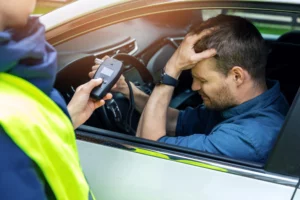
| Let’s say a driver is charged with DWI after a breathalyzer shows a BAC of 0.10. A traditional attorney might argue about traffic stops or field sobriety tests. A forensic attorney, however, examines the actual instrument: Was it properly calibrated?Were control tests within acceptable ranges?Did the machine experience radio-frequency interference?Did mouth alcohol or GERD affect the reading? If the machine produced scientifically unreliable data, the BAC result may be excluded or undermined. |
| Scenario 2: A drug possession charge |
| Suppose a client is arrested with a substance that “tested positive” for an illegal drug. A typical defense might focus on search and seizure. A lawyer-scientist will also examine: Whether the GC/MS chromatogram supports the lab’s conclusionWhether retention times match expected standardsWhether contamination or improper controls skewed resultsWhether the substance was weighed and measured properly If the science is flawed, the prosecution’s case can collapse. |
| Scenario 3: Blood toxicology in an accident case |
| A driver involved in a crash is accused of being impaired due to THC. An attorney who can’t analyze the science will look at procedural errors and inconsistencies in reports. A lawyer-scientist also scrutinizes the toxicology screen: Was the sample properly preserved?Did the lab account for metabolite conversion?Were the instruments detecting active THC or inactive metabolites? These distinctions can mean the difference between guilt and innocence. |
Why should I hire a lawyer-scientist?
Science is now central to prosecution. Whether it’s breath tests, blood tests, drug tests, or forensic digital evidence, the state increasingly relies on lab-generated data rather than witness testimony alone. Hiring a lawyer-scientist provides several advantages:
- They understand the science behind your charge: Most attorneys know how to argue. Few know how to interpret chromatograms, challenge calibration logs, or question toxicology reports. Lawyer-scientists read scientific data the way prosecutors read plea agreements.
- They identify weak points in the state’s evidence: Faulty science leads to wrongful arrests and convictions. A forensic attorney is trained to catch contamination, improper handling, faulty equipment, insufficient controls, and lab misconduct. These weaknesses often open the door to dismissals or reduced charges.
- They can cross-examine lab technicians more effectively: Cross-examining a lab analyst requires knowing more than basic chemistry; it requires speaking the same scientific language. Lawyer-scientists can challenge assumptions, expose methodological flaws, and demonstrate uncertainty that the prosecution hoped you wouldn’t notice.
- They bring credibility to your defense: Judges and juries often place heavy weight on scientific testimony. A lawyer-scientist can counter that testimony with informed, credible, scientifically grounded argumentation.
- They level the playing field against prosecutors: Prosecutors rely on lab results because they appear objective and unassailable. A forensic attorney knows better and knows how to show the court where the evidence falls apart.
Ready to get smart about your defense? Call Guzman Law Firm.
If you’re facing criminal accusations, you need more than an ordinary defense — you need someone who understands both the legal strategy and the scientific evidence the prosecution will use against you. Javier Guzman’s ACS-CHAL Lawyer-Scientist designation demonstrates a commitment to mastering the scientific principles that can make or break your case.
Don’t leave your defense to guesswork or assumptions about laboratory accuracy. Work with a lawyer who can analyze the evidence on a molecular level.
Call Guzman Law Firm today at (956) 516-7198 to schedule your consultation and build the defense you deserve.
More Helpful Articles by Guzman Law Firm:
- What to Do if Your Federal Case Involves Illegally Obtained Evidence
- How to Navigate a Federal Arrest Warrant
- When to Call a Catastrophic Truck Accident Lawyer
- How Prosecutors Use Text and Phone Records in Smuggling Cases
- How Federal Investigators Build Illegal Border Crossing Cases